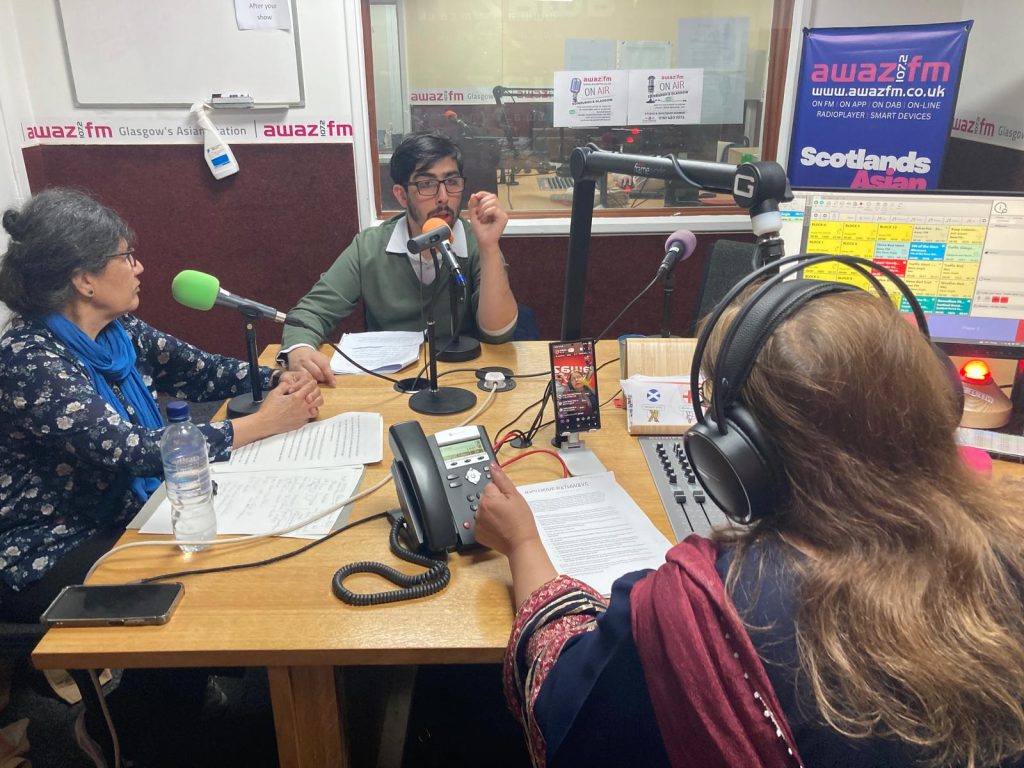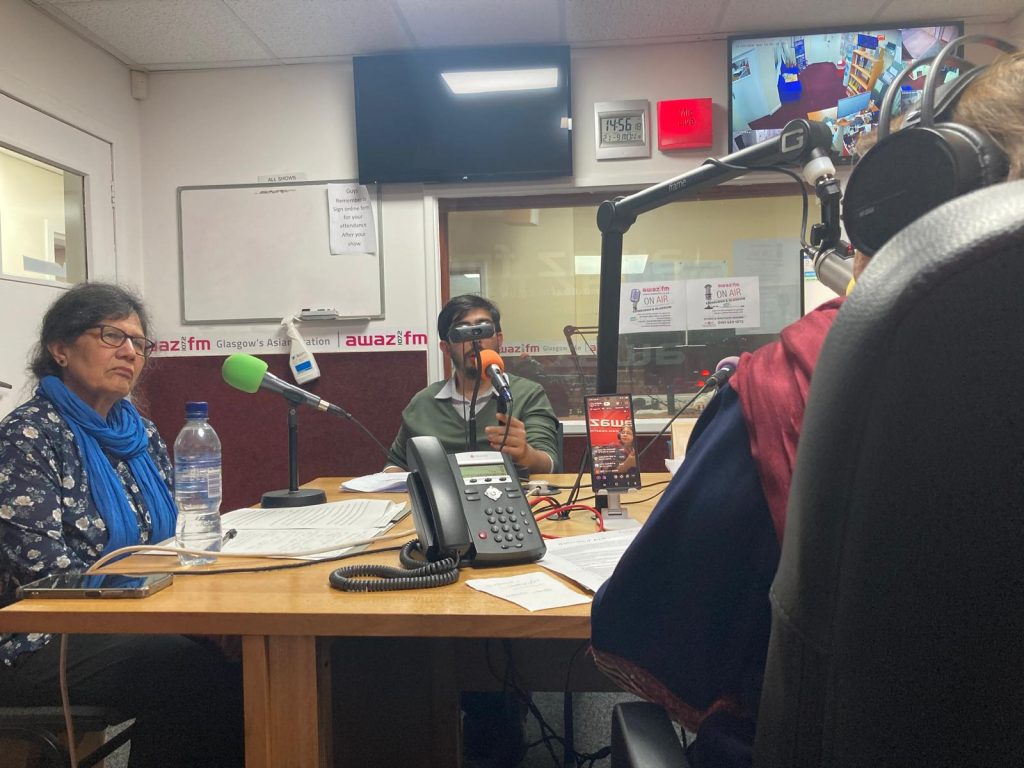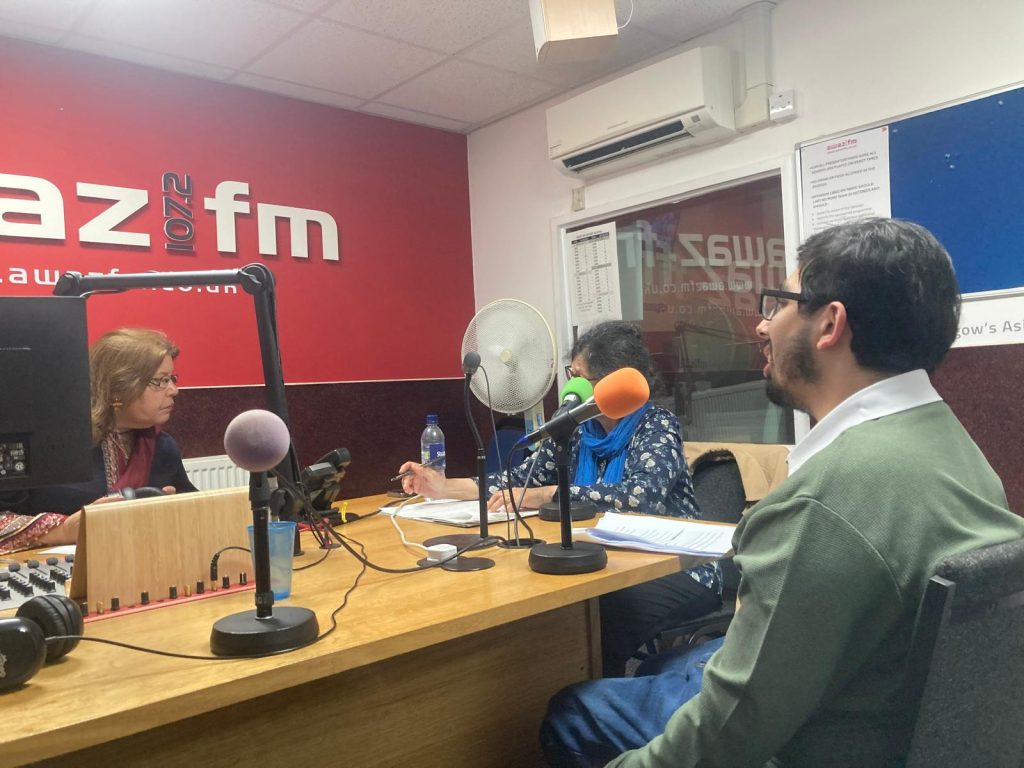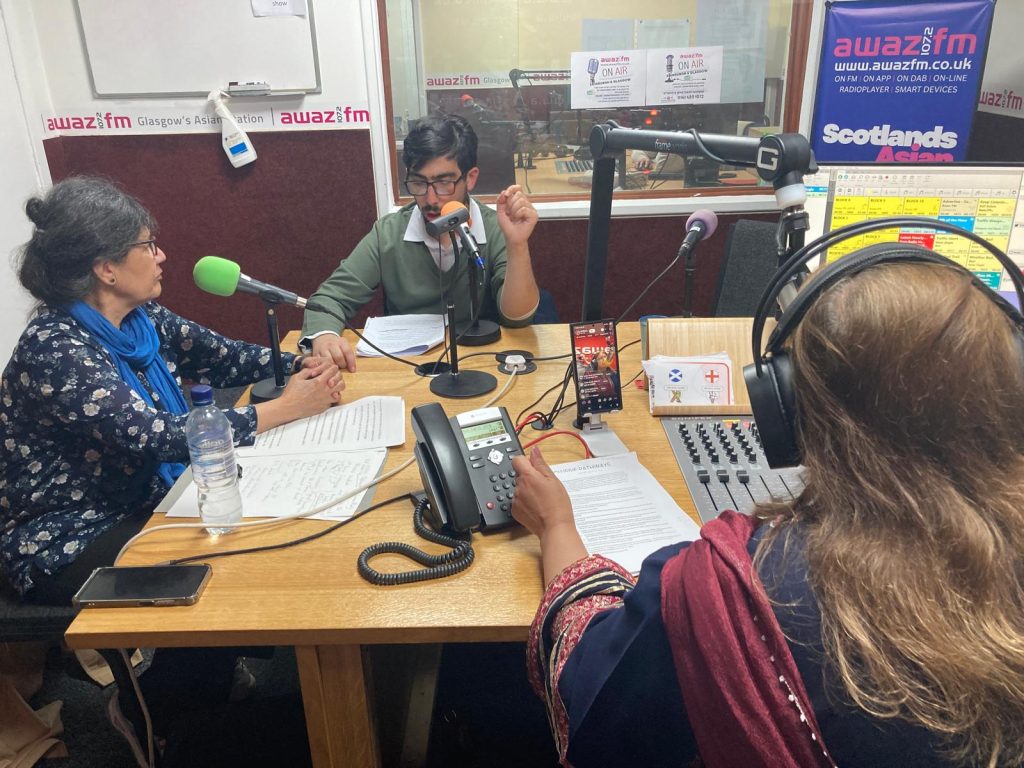
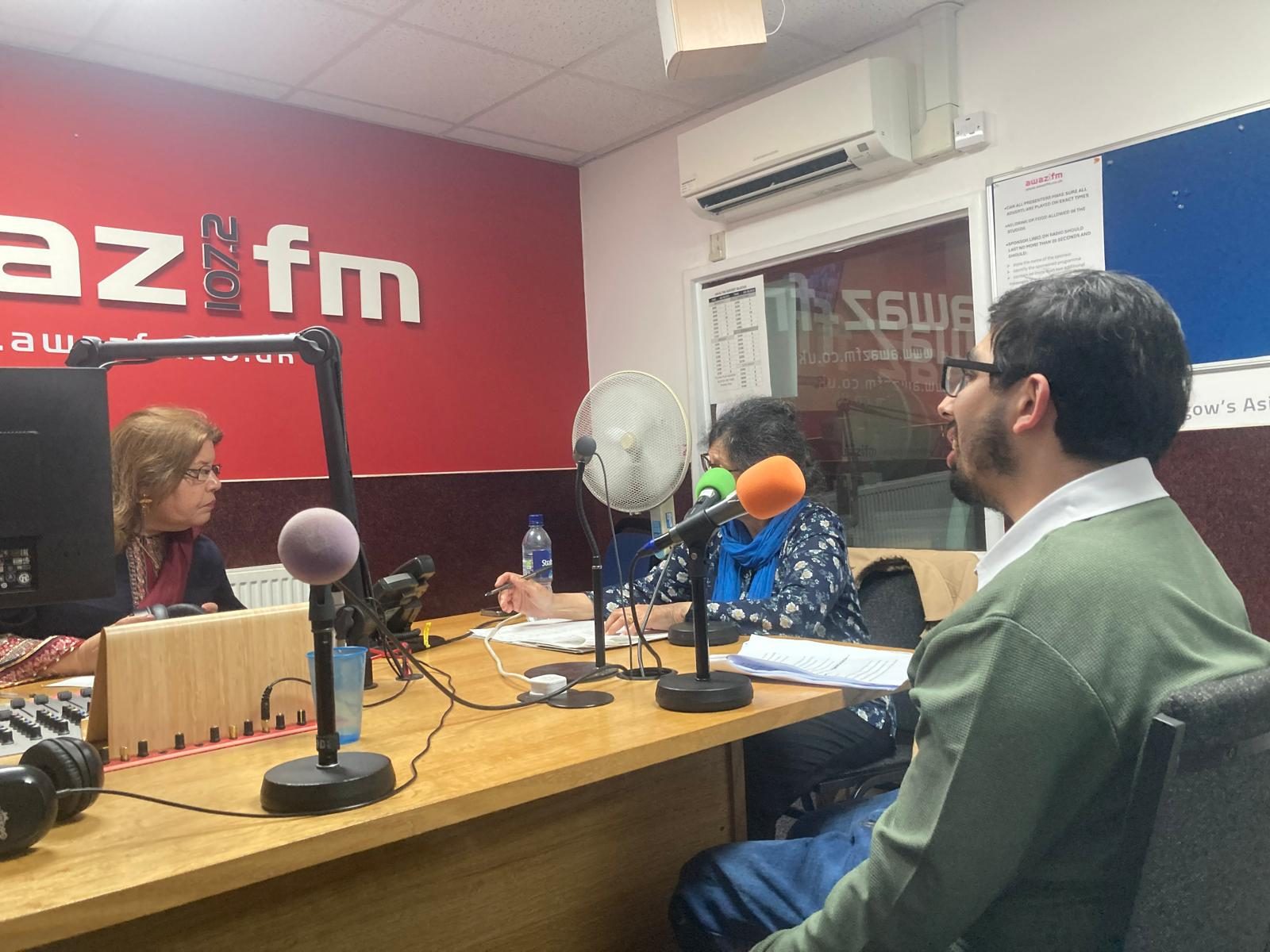
Interview with Awaz FM
Press Release:
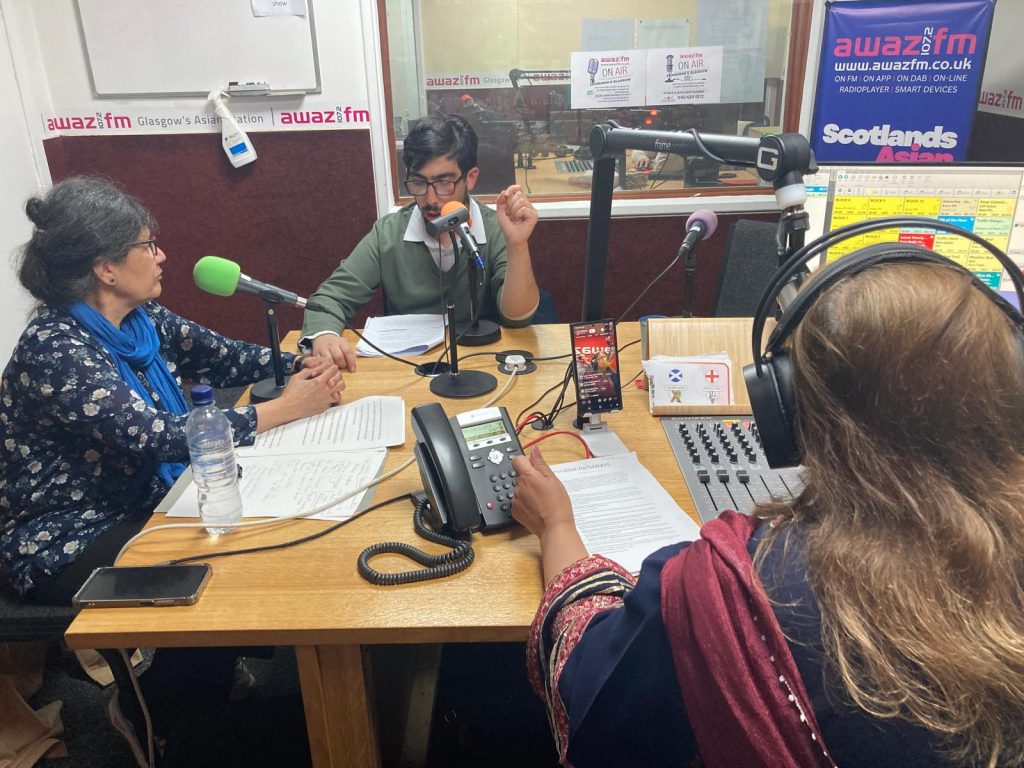
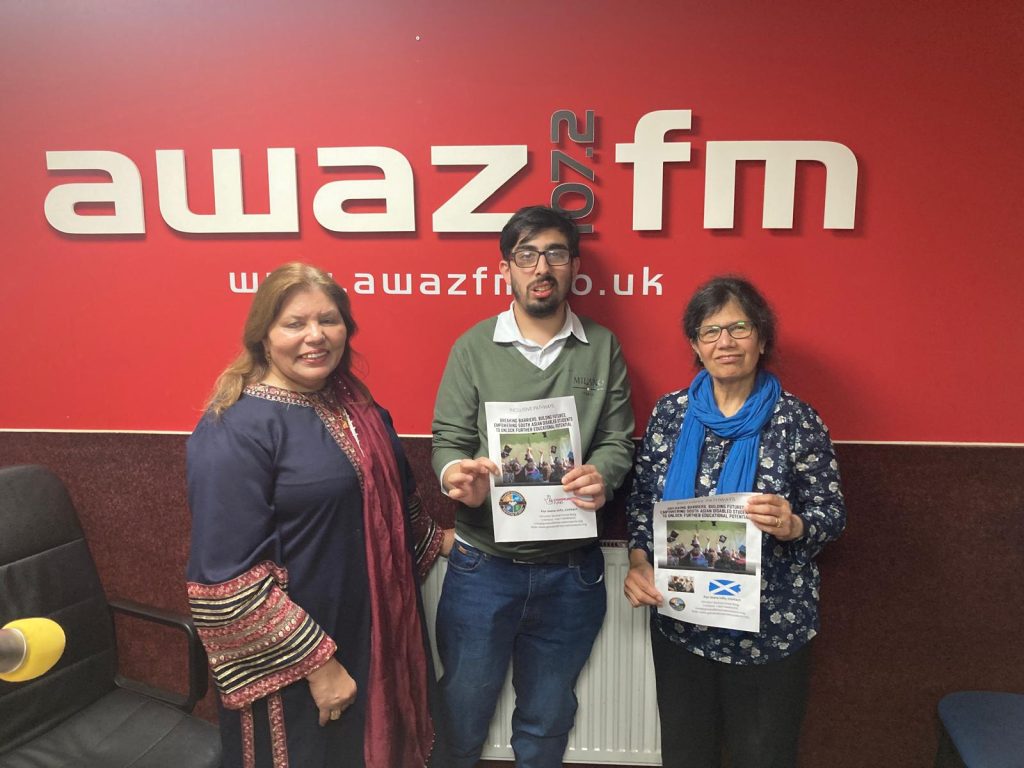
Goodwill International – SCIO wholeheartedly thanks Awaz FM Glasgow for their time. We are grateful to Shabnum Khilji for her kind comments and lively interview approach.
We are now releasing the Interview Transcript.
The questions are : First, can you tell us a little about Goodwill International and the work you do across Scotland?
Tell us about your Inclusive Pathways project. Who is it for, and what are you hoping to achieve?
You work particularly with disabled people from South Asian communities. What challenges or barriers are you seeing within these communities?
Disability can sometimes be hidden because of stigma, fear or misunderstanding. Why do you think some families still find it difficult to talk openly about disability?
When it comes to college or university, what can stop a disabled person from believing that higher education is actually an option for them?
If someone wants to study but doesn’t know where to start, what practical support can Inclusive Pathways give them?
Finally, if a disabled young person or their family is listening today, what would you like them to know — and how can they get in touch with you for support?
Please feel free to reach out.
1. Goodwill International is a charity organisation for adults with disabilities from ethnic minority communities, especially South Asian communities, living across Scotland. It’s a very new charity and I am in the process of developing it.
2. The Inclusive Pathway project is our very first project, and we have been very lucky to receive a small fund from the National Lottery. The aim of this project is to help Adults with disabilities from ethnic minorities who are interested in pursuing further or higher education. The main objectives of this project are to help adults with disabilities from Ethnic minorities find an appropriate course, help them complete their application forms, liaise with colleges and universities, and if there is any need for student funds, support individuals in acquiring them. Also, raise awareness of disability support and financial assistance available in colleges and universities.
3. One challenge I have encountered is reluctance among people to engage and address disability-related issues. Instead, it may be viewed as a burden or hardship rather than as an issue that should be addressed through inclusion and community support.
Some individuals and families may also hold cultural or social attitudes about disability that have developed over many years. These attitudes can sometimes contribute to stigma.
We cannot deny that media portrayal has also contributed to amplifying this stigma. Some South Asian movies continue to reinforce stigma by portraying negative images of disabled people
and families having low expectations of educational attainment. Families may underestimate the educational potential of a disabled person. They may think that employment, independence or higher education are less realistic goals. Disabled South Asian women may experience overlapping barriers related to disability and gender expectations.
There can be language and communication barriers, and discrimination related to both ethnicity and disability. And finally, lack of awareness – student and families may not know what disability support or financial assistance is available.
4.
Disabilities may sometimes be associated with shame, dependence or negative social perceptions. There is sometimes fear of judgement. One of the biggest hidden disability issues is mental health. They may think the community treat them differently. Some adults do not discuss disabilities because they do not want to be perceived as dependent and incapable.
Families may experience social isolation or exclusion from larger family and community events or activities due to their disabled child.
As a charity, we strive to foster understanding, inclusion, and equal opportunities for disabled individuals, while acknowledging the varied attitudes and experiences within our communities
5. Disabled students, especially those who are still at school, can often worry about passing their Nat 5s and whether they will succeed in the future.
But one set of results does not define your whole life. There is no shame in trying again, taking a different route, or even starting from scratch like me. When I was in school, some of my teachers told my mother, “Don’t expect him to go to university.” But I persisted and went to college, starting from NC, then going to HND in five years, then attending university, so if I can do it, others can do it too.
As I said earlier, students and families are not aware of the disability support or financial assistance available at colleges and universities. Some people may think commuting to an educational institute isn’t possible, but they may not know these institutes can provide transportation.
6. The first thing is just to contact us. We will meet with you. Help you pick out the most appropriate course and liaise with the college or university, etc.
7.
You are not alone. We are here to help you, and to help your sons and daughters flourish into confident, independent Adults who can pursue their ambitions, access further and higher education, and find their own path in life. Take the first step today, and we will support you.
You can contact us via info@goodwillinternationalscio.org, or visit our website https://goodwillinternationalscio.org/inclusive-pathways-enquires/, or WhatsApp us on 07741450223.
Because sometimes, all it takes is one person to open a door, one person to provide guidance, and one person to say:
“Don’t give up. Try again. Your second innings is still to come.”
Thank you.
I always come back to something Harsha Bhogle once said: “Do not worry about outcomes in life. You are not playing a T20 match in life – we are playing a Test match – the great thing about a Test match is you always get a second innings.” I think that is a powerful message for anyone who feels that they are falling behind. In a Test match, you are given time. Disabled People can make mistakes, regroup, learn from what happened, but come back even stronger.
Our journey doesn’t have to look like everyone else’s or be dictated by society. Try, Try Again.